A polished floor, protective coating or outdoor sealer is only as reliable as the surface beneath it. Concrete surface preparation is the work that determines whether a finish bonds properly, wears evenly and looks right years after handover. It is not the glamorous part of a project, but it is where durable results begin.
For Melbourne homes, garages, retail spaces, warehouses and outdoor areas, concrete can carry years of tyre marks, oil, old coatings, moisture, adhesive residue and inconsistent previous repairs. Covering those issues without properly addressing them can lead to peeling, patchy colour, visible defects or premature wear. No surprises. No shortcuts.
What concrete surface preparation actually does
Preparation creates a clean, sound and suitably profiled concrete substrate for the finish being installed. Depending on the system, that may mean mechanically removing coatings, opening the concrete surface, flattening high spots, repairing cracks or controlling moisture-related risks before work continues.
The aim is not simply to make concrete look cleaner. The goal is to give a polished, grind-and-seal, epoxy or sealing system the right foundation to perform as intended. A floor can look acceptable on day one and still fail early if the surface was too smooth for adhesion, contaminated by oil, or weakened by unsound concrete.
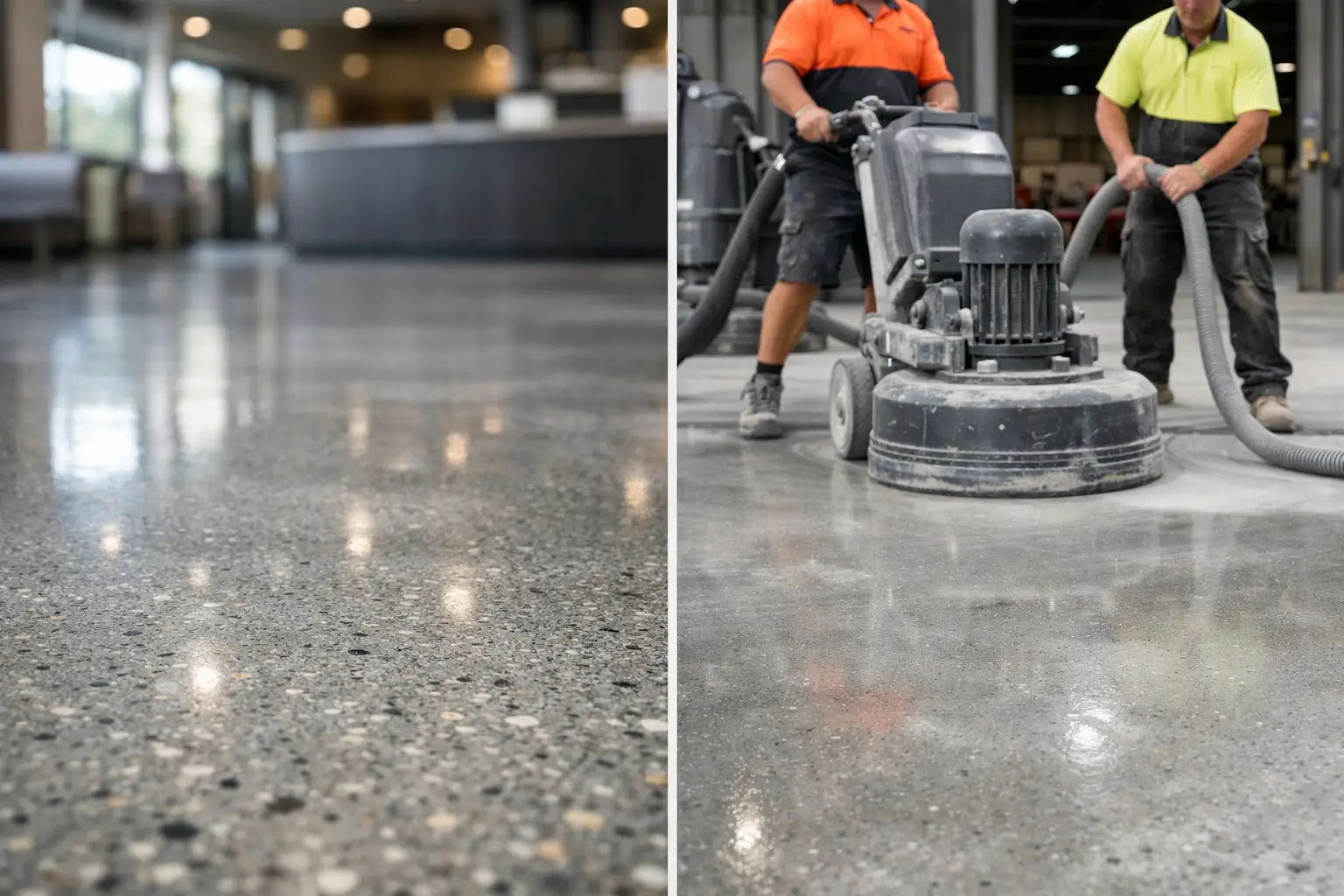
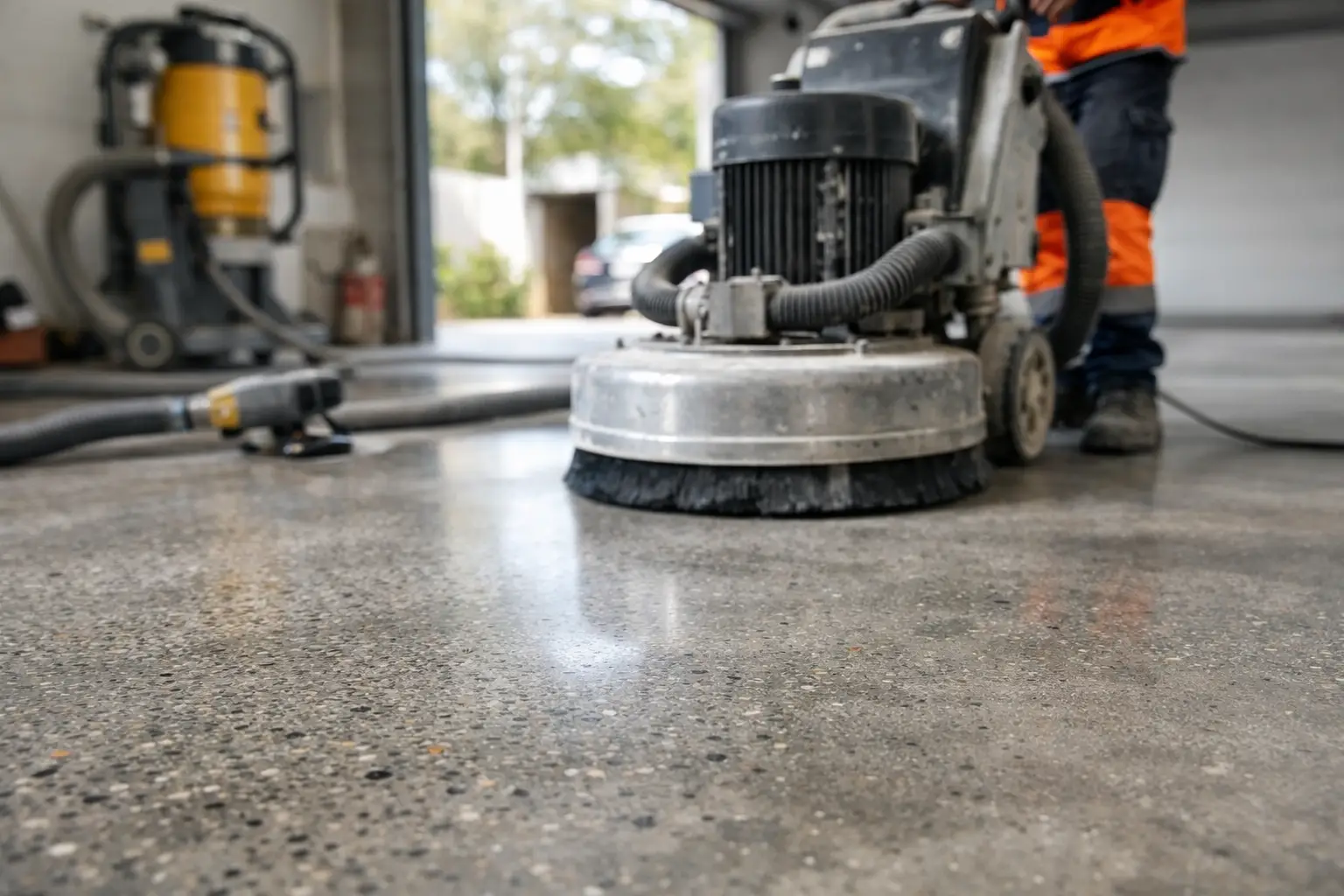
Mechanical diamond grinding is central to many projects because it removes material in a controlled way. It can take off old finishes and surface contamination while creating a consistent profile. That profile gives coatings something to grip, or provides the starting point for a refined polished concrete finish.
Why surface condition changes the finished result
Concrete is rarely uniform. Even slabs that appear sound can vary in density, flatness, porosity and strength from one area to the next. A garage slab may have oil absorbed beneath the surface. A commercial floor may have old adhesive or a failed coating system. An outdoor driveway can show weathering, staining and wear from tyres.
These conditions affect the method, the schedule and sometimes the recommended finish. For example, a clear sealer may suit sound outdoor concrete where the existing character is worth retaining. A heavily marked slab may need more extensive grinding before a grind-and-seal system can achieve a consistent appearance. In a commercial setting, an epoxy system may require a specific surface profile to achieve dependable bond strength under regular traffic.
There is no benefit in promising an identical finish from every slab. Aggregate exposure, existing patch repairs, old stains and concrete age can all remain visible to some degree. Correct preparation gives the best possible starting point, while an honest site assessment sets practical expectations about the final look.
The key stages of concrete surface preparation
Assess the slab before selecting the system
The first stage is understanding what is on and in the concrete. A proper assessment looks at the slab’s general condition, cracks, previous coatings, contamination, level changes and the intended use of the space. It also considers practical details such as access, edge work, drainage outdoors and the downtime a business can accommodate.
This step matters because the right finish depends on how the area will be used. A family garage needs resistance to tyre marks, oil and daily cleaning. A café, showroom or workshop needs a floor that handles foot traffic, equipment and ongoing presentation. A driveway or patio needs protection that suits UV exposure, rain and changing temperatures.
Remove weak layers and contamination
Paint, old sealers, adhesives and poorly bonded coatings must be removed rather than worked around. If a new system is applied over a failing layer, it is only attached to that failed layer. The risk of lifting or delamination remains.
Diamond grinding cuts through these surface materials and exposes stable concrete. Where oil or other contaminants are present, treatment may be required before the final profile is created. The approach depends on how deep the contamination has penetrated and what finish will be installed over it.
Create the right profile
Not every surface should be prepared to the same texture. Polished concrete follows a staged grinding and refinement process to produce the selected level of sheen and aggregate exposure. Coatings need a profile that supports mechanical adhesion without leaving an unnecessarily rough finish. Outdoor sealing generally calls for thorough cleaning and preparation that preserves safe, practical use of the area.
This is where experience makes a visible difference. Too little profiling can compromise adhesion. Too aggressive an approach can expose more aggregate than expected, create avoidable variation or add unnecessary work. The preparation needs to match the specified system and the condition of the slab.
Repair defects before finishing
Cracks, holes, spalls and damaged joints should be addressed before the decorative or protective layer goes down. Repairs are important for performance, but they also affect appearance. On polished or grind-and-seal concrete, repaired sections can remain visible because the repair material and surrounding slab do not always reflect light or take colour in exactly the same way.
That does not make repairs a reason to avoid the project. It means they should be discussed early, especially where a clean, design-focused finish is expected. A capable contractor identifies these areas before installation rather than leaving them as an unexpected result at handover.
Clean thoroughly and control dust
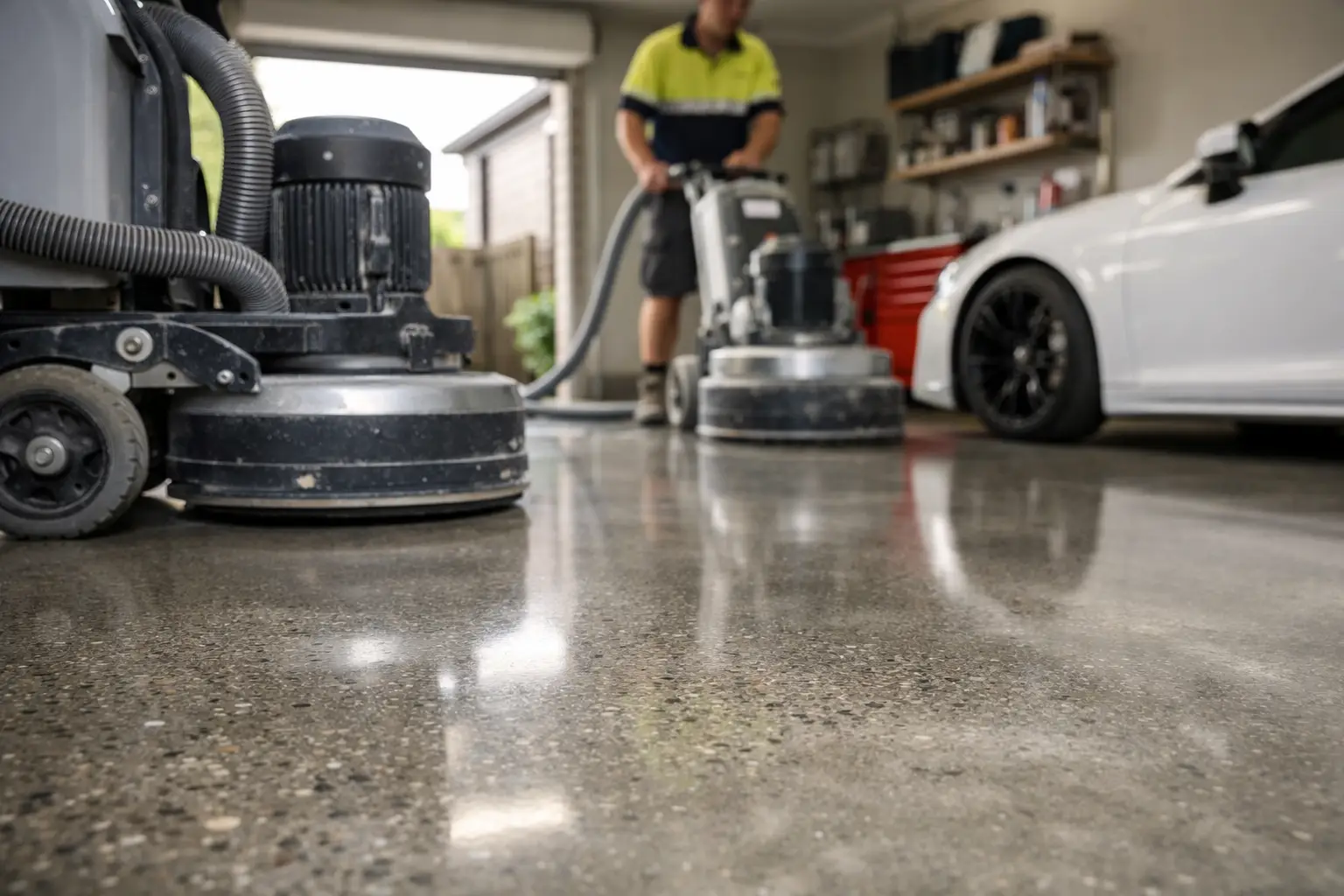
The final prepared surface must be clean, dry and free from loose debris before the next stage begins. Dust control is part of quality work, particularly inside occupied homes, retail spaces and commercial premises. Professional equipment with effective extraction helps keep the work area cleaner and prevents dust from interfering with coatings or sealers.
Preparation also includes protecting adjacent surfaces and managing the work sequence. Doorways, walls, joinery and finished areas need consideration before grinding begins. Good planning reduces disruption and helps keep the project on schedule.
Preparation requirements differ by finish
Mechanical polished concrete
Polished concrete is built through progressive mechanical refinement. Preparation removes existing contaminants and establishes an even base, then the concrete is refined through successive stages. The slab itself becomes the finished surface, so its natural variation is part of the outcome.
This option suits interiors and garages where long-term durability, a contemporary appearance and straightforward maintenance are priorities. It performs well under regular foot traffic and can handle demanding daily use when the slab and site conditions are appropriate.
Grind-and-seal finishes
A grind-and-seal system gives concrete a cleaner, more uniform appearance while retaining practical durability. It is often a good fit where full mechanical polishing is not required, or where the slab needs a finish that balances appearance, budget and turnaround.
Preparation remains critical. The surface must be properly ground, repaired and cleaned so the sealer can bond evenly. The selected sealer should match the location, expected traffic and preferred sheen level.
Epoxy floor systems
Epoxy is a high-performance choice for many garages and commercial environments, but it is unforgiving of poor preparation. The concrete needs a suitable mechanical profile, sound repairs and careful treatment of contamination. Moisture conditions also need consideration, as vapour movement can affect adhesion over time.
Where the preparation is right, epoxy can provide a clean, hard-wearing surface with strong resistance to common operational mess and daily wear. Where it is rushed, the cost of rework can be significant.
Outdoor concrete sealing
Driveways, patios and pathways face a different set of pressures: sun, rain, dirt, tyre traffic and seasonal movement. Preparation focuses on removing built-up grime, existing unstable coatings and surface contaminants while ensuring the concrete is ready for the selected sealer.
The best system depends on the concrete’s condition and the desired appearance. Some property owners want to retain a natural finish; others want greater colour enhancement or a refreshed surface. Slip resistance, drainage and exposure should be considered before choosing the final product.
What property owners should ask before work starts
Clear answers early make a flooring project easier to manage. Ask what condition the slab is in, what preparation is included, how repairs will appear, how dust will be controlled and how long the area will be unavailable. For coatings and sealing, ask which profile and application system is being used and why it suits the space.
It is also sensible to discuss realistic appearance expectations. Concrete has character, and no two slabs finish identically. A transparent contractor will explain where patching, aggregate, existing marks or slab movement may influence the result before work is underway.
At AMD Polished Concrete, preparation is treated as part of the finished floor, not a preliminary task to rush through. The process starts with the slab, the use of the space and the performance required after handover.
The right surface preparation protects more than the finish. It protects the time, budget and confidence invested in the project. Before choosing a colour, sheen or system, make sure the concrete beneath it is ready to hold up.