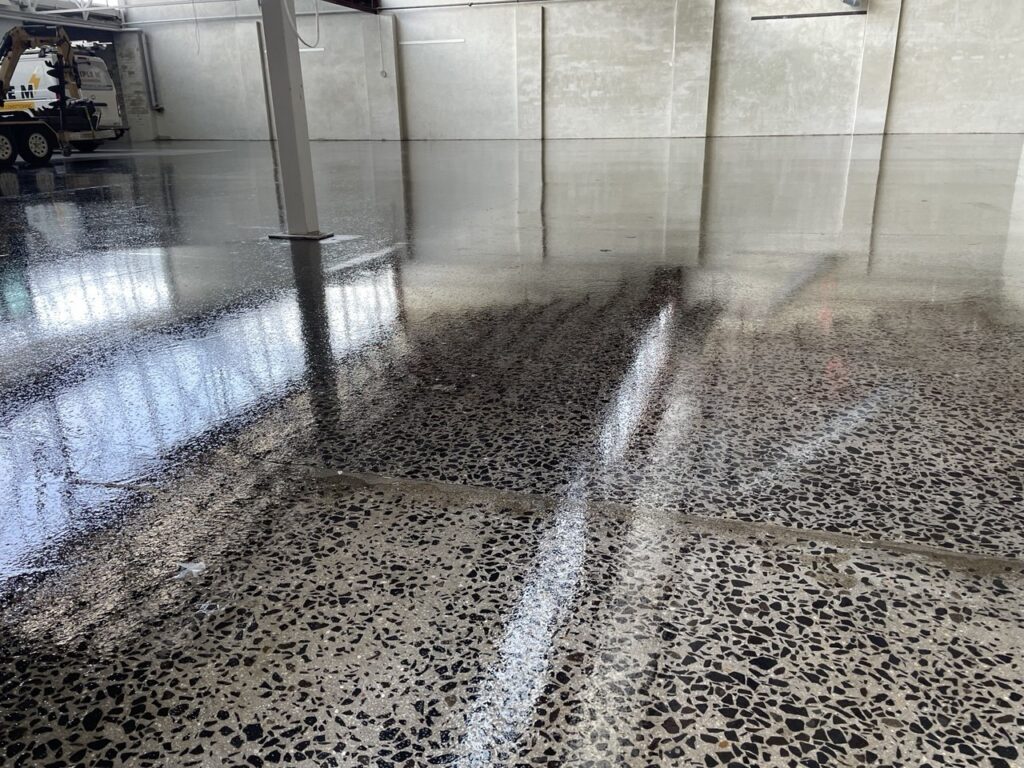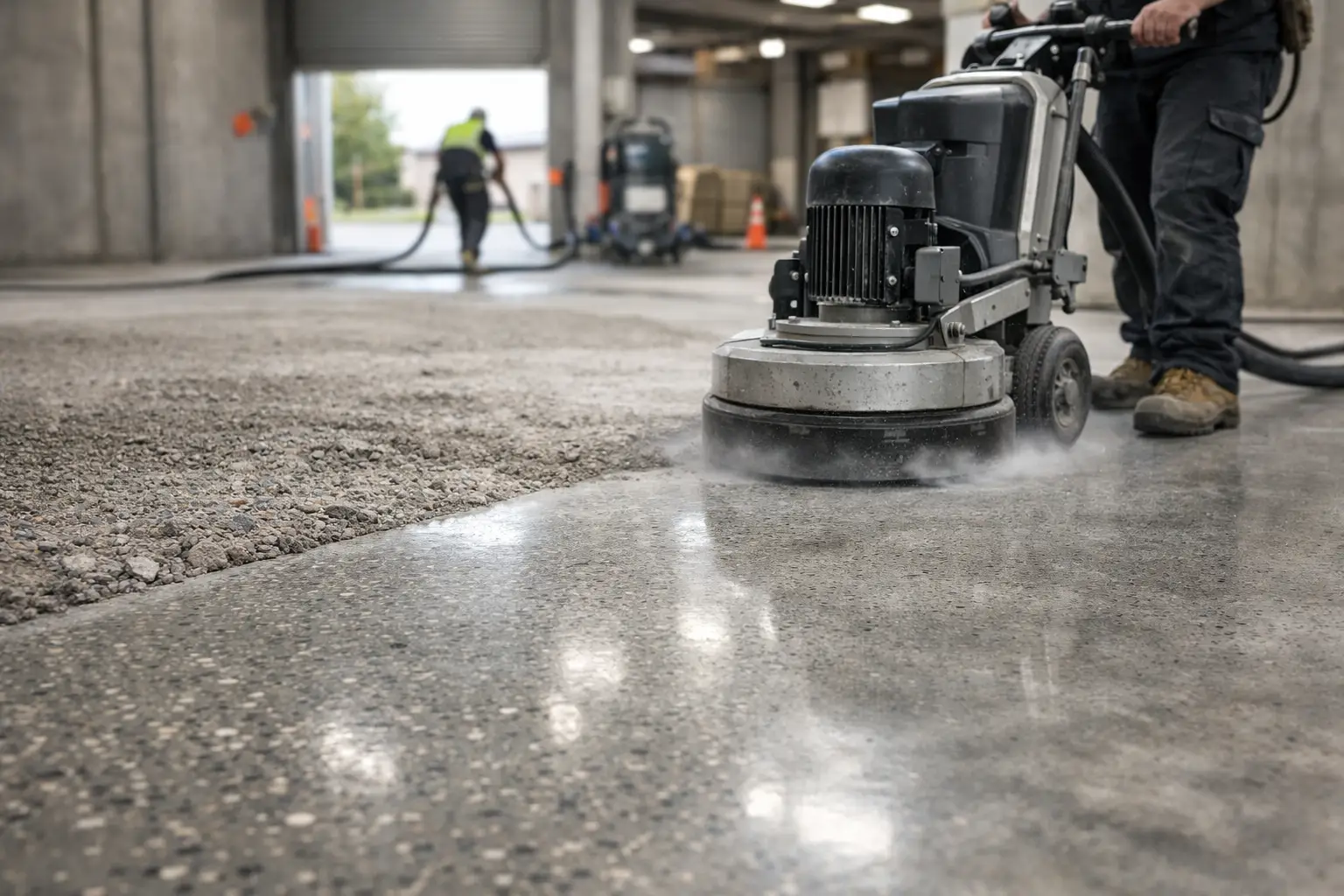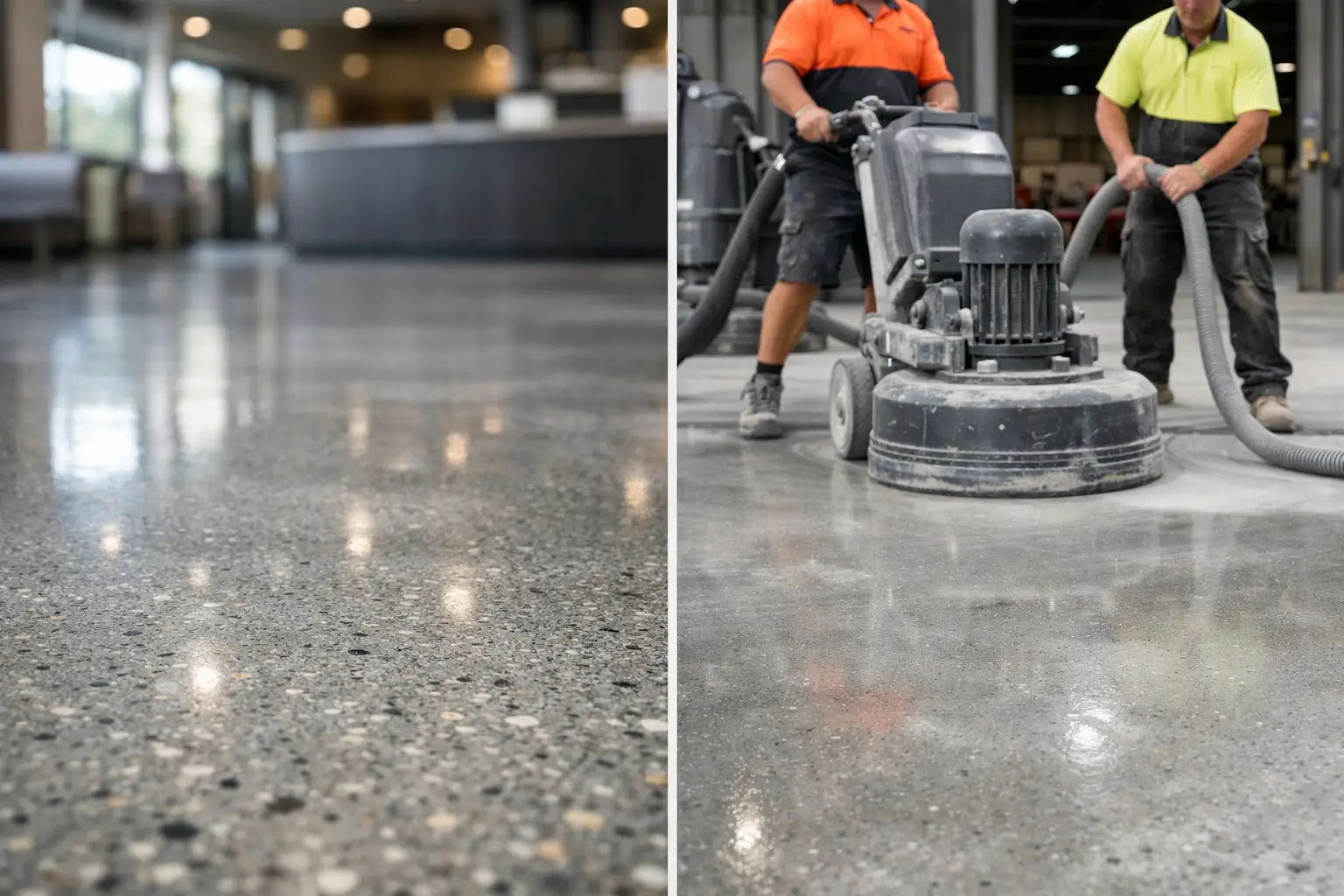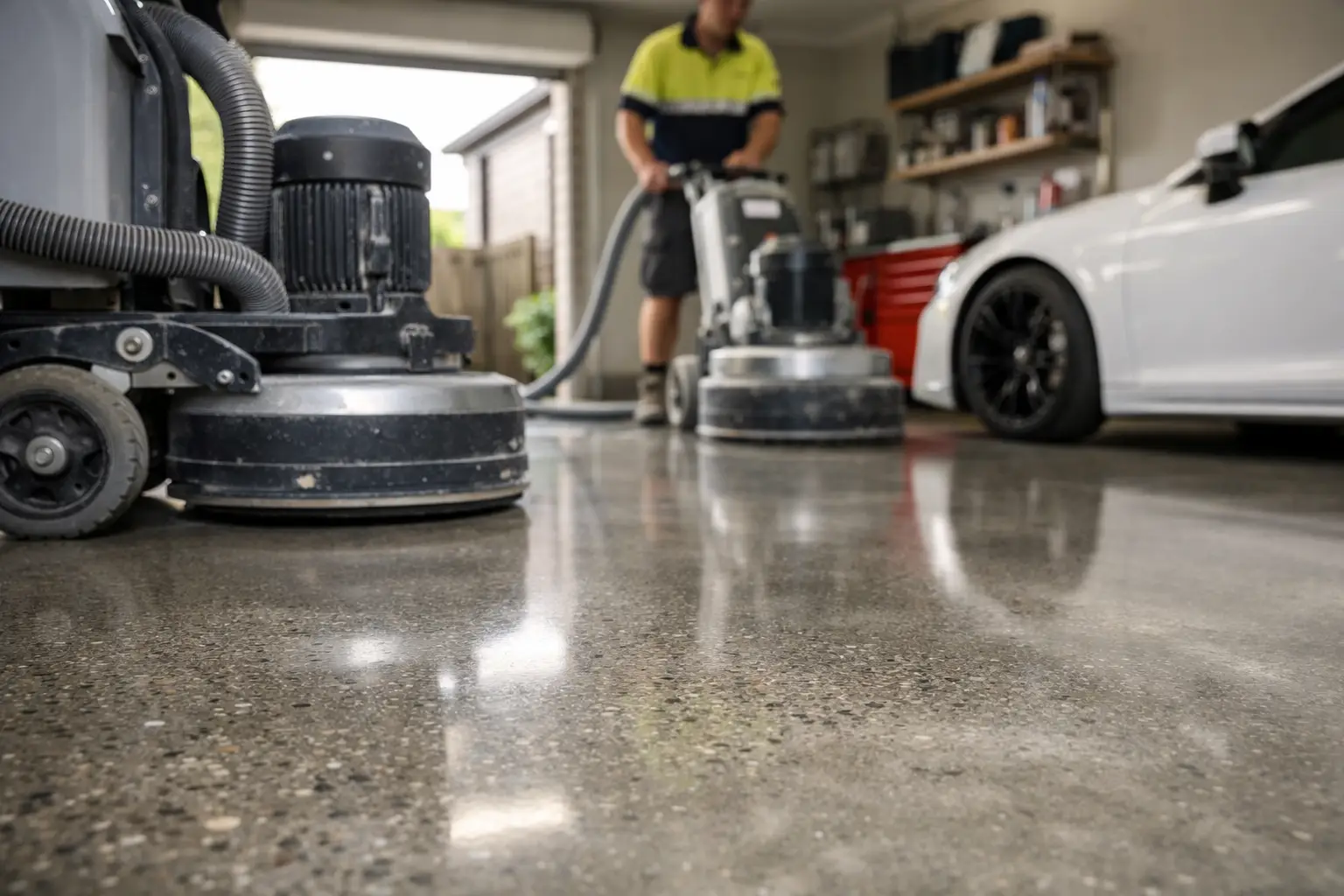
A garage floor that dusts under tyres, a café floor marked by daily foot traffic, or a patio that has lost its finish all present the same question: do you need a full polished concrete system, or is a grind and seal concrete finish the better fit? For many Melbourne properties, grind and seal delivers the clean, refined concrete look people want with dependable surface protection and a more practical project scope.
The result depends on more than the sealer chosen at the end. It starts with the slab itself, the condition of the existing surface, the traffic it will carry, and the preparation carried out before any coating is applied. No surprises. No shortcuts.
What Is Grind and Seal Concrete?
Grind and seal concrete is a surface-finishing system that mechanically grinds the concrete, then protects it with a premium topical sealer. The grinding stage removes weak surface material, old coatings, contaminants and minor imperfections while creating the correct profile for the sealer to bond properly.
Unlike mechanically polished concrete, where the concrete is progressively refined and densified to create a highly polished surface, a grind-and-seal floor relies on a protective coating to provide its final appearance and performance. The finished look can range from natural and matte through to satin or higher gloss, depending on the sealer system and the intended use of the space.
It is a strong option for garages, workshops, retail spaces, showrooms, hospitality venues, living areas, patios and covered outdoor zones. It can also be suitable for driveways and pathways when the coating system is selected specifically for exterior exposure and slip requirements.
Why Preparation Decides the Result
Concrete is not a blank canvas. It can hold curing compounds, paint, adhesive, oil, tyre residue, moisture and years of embedded dirt. Applying a sealer over those issues may make the floor look better briefly, but it will not create reliable adhesion. That is where peeling, patchy sheen and premature wear begin.
Correct diamond grinding opens the surface and removes what does not belong there. It also gives the installer a clear view of the slab condition. Cracks, spalls, failed repairs and soft areas should be identified before the finish is applied, not hidden beneath it.
For commercial sites, this stage is particularly important. Warehouses, loading areas and busy workspaces often have contamination that is not obvious from a visual inspection alone. A floor must be prepared for its actual operating conditions, including forklifts, trolleys, foot traffic, cleaning regimes and occasional chemical exposure.
Moisture also matters. Concrete can release moisture vapour long after it appears dry on the surface. If the slab has excessive moisture movement, the coating selection and preparation process need to account for it. The right answer is not always the quickest answer, but it is the one that protects the investment.
Repairs should be visible only when they need to be
Crack and joint repairs can improve the appearance and serviceability of a floor, but concrete repairs are rarely invisible in every light. On a natural concrete finish, variation is part of the character of the material. A good contractor will explain where repairs are needed, what they will look like, and whether a more uniform coating system would better suit your expectations.
Where a Grind-and-Seal Finish Performs Best
A grind-and-seal system works well where clients want a tidy, hard-wearing finish without the deeper refinement process of full mechanical polishing. In a residential garage, it can turn a dusty, stained slab into an easy-clean surface that handles tyre marks, oil drips and regular use far better than bare concrete.
Inside homes, it suits contemporary living areas, kitchens and extensions where the existing slab has enough visual interest to retain. Expect natural movement in colour, aggregate exposure and old patch repairs. That variation is often exactly what gives concrete its appeal, but it should be a deliberate design choice.
For shops, cafés, offices and display areas, the system offers a professional appearance with efficient maintenance. A well-selected sealer can improve stain resistance and reduce dusting while keeping the concrete aesthetic visible. In high-traffic commercial settings, the finish needs to be matched to cleaning products, traffic type and expected abrasion. A glossy floor may look sharp at handover, but a satin finish can be more forgiving where scuffs and daily use are unavoidable.
Outdoor concrete requires additional care. Melbourne weather brings UV exposure, rain, temperature changes and dirt carried in from gardens and footpaths. Exterior-grade sealers need to resist UV breakdown and provide appropriate slip resistance when wet. A product that performs well in an indoor garage is not automatically right for a driveway or pool-adjacent patio.
Choosing the Right Look and Sealer
The appearance of a grind-and-seal floor comes from the combined effect of the grinding level, concrete condition and sealer finish. Light grinding generally retains more of the original slab character. Deeper grinding can expose more aggregate, although the outcome depends on the slab mix, its age and how it was originally poured.
Most clients choose between matte, satin and gloss. Matte gives a restrained, contemporary look and conceals minor marks well. Satin provides a little more depth and is often a practical choice for homes and commercial interiors. Gloss creates stronger reflection and colour depth, but it can show dust, scuffs and surface irregularities more readily.
Colour-enhancing sealers can deepen the natural tone of concrete, while clear systems keep the appearance closer to the freshly ground slab. Neither is automatically better. The right finish depends on how the area is used, how much natural light it receives, and the level of ongoing maintenance the owner is comfortable with.
Slip resistance should be discussed early, especially for entrances, kitchens, bathrooms, ramps and external spaces. A finish can be attractive and practical, but the specification needs to suit the risk profile of the area rather than chase a showroom look alone.
What the Installation Process Should Look Like
A professional grind and seal concrete project begins with a site assessment. The contractor should inspect the slab, ask how the space is used, identify existing coatings or contamination, and discuss the appearance you are aiming for. This is the point to raise concerns about moisture, cracks, access, furniture, cure times and project timing.
The floor is then prepared by diamond grinding using the appropriate equipment and dust-control methods. Edges, corners and areas around fixed elements require separate attention. This detail work matters. A broad floor can look excellent from the doorway while poor edges give away a rushed installation.
After grinding, repairs are completed where required and the surface is cleaned thoroughly. The sealer is applied in controlled coats according to the product system, temperature and site conditions. Rushing this stage, applying too heavily, or ignoring recoat windows can affect clarity, adhesion and durability.
Finally, the floor should be inspected with the client before handover. You should know when it can take foot traffic, when furniture or vehicles can return, which cleaning products to use, and what to avoid during the initial cure period.
Maintenance Is Simple, Not Zero
One of the main advantages of a sealed concrete floor is straightforward maintenance. Regular sweeping or vacuuming removes abrasive grit. Mopping with a pH-neutral cleaner helps prevent residue buildup that can dull the finish or reduce traction.
Avoid harsh acids, solvent-heavy products and aggressive degreasers unless they are approved for the specific coating. In garages and workshops, clean fuel, oil and chemical spills promptly. Sealed concrete is more resistant than bare concrete, not immune to damage from every substance left sitting for days.
Over time, high-use areas may need cleaning, maintenance coats or local attention depending on the system and traffic levels. This is normal asset care, not a failure. Planning for it helps retain a consistent finish and prevents small wear points from becoming larger repair work.
When Another System May Be Better
Grind and seal is not the right answer for every slab. If you want a highly reflective, long-life exposed aggregate finish with no topical film, mechanical polishing may be the better option. If the floor needs a uniform colour, high-build chemical resistance or a specific industrial performance rating, an epoxy or polyurethane system may be more suitable.
Likewise, severely damaged concrete may need repairs, levelling or a different floor build-up before it can carry a refined finish. Honest advice at the assessment stage saves expensive changes later.
For Melbourne homeowners, builders and commercial operators, the best floor is the one designed around the slab and the way the space will actually work. A properly prepared and properly sealed concrete surface should look considered on day one and continue earning its place long after the site is handed back.