A garage is rarely just a place to park the car. It is a workshop, storage zone, entry point and sometimes the hardest-working room in the house. Garage floor polishing gives that space a cleaner, more durable surface that stands up to tyres, oil drips, foot traffic and everyday mess without looking like an afterthought.
The result should not be chosen on appearance alone. A high-gloss showroom finish can look excellent, but the right system depends on the condition of the existing slab, how the garage is used, moisture levels and the level of maintenance you are prepared to do. Good flooring starts with an honest assessment of the concrete beneath it.
What garage floor polishing actually involves
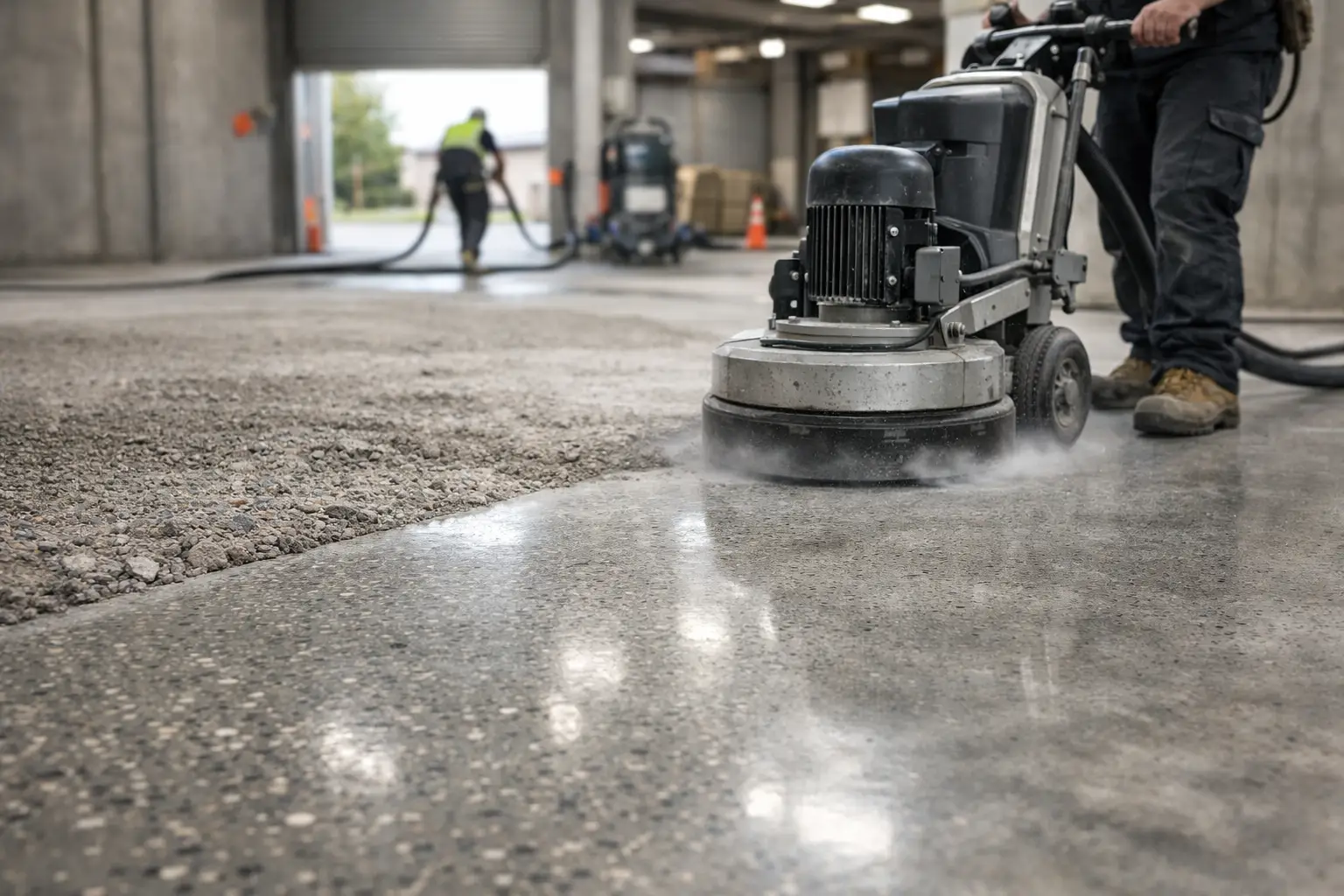
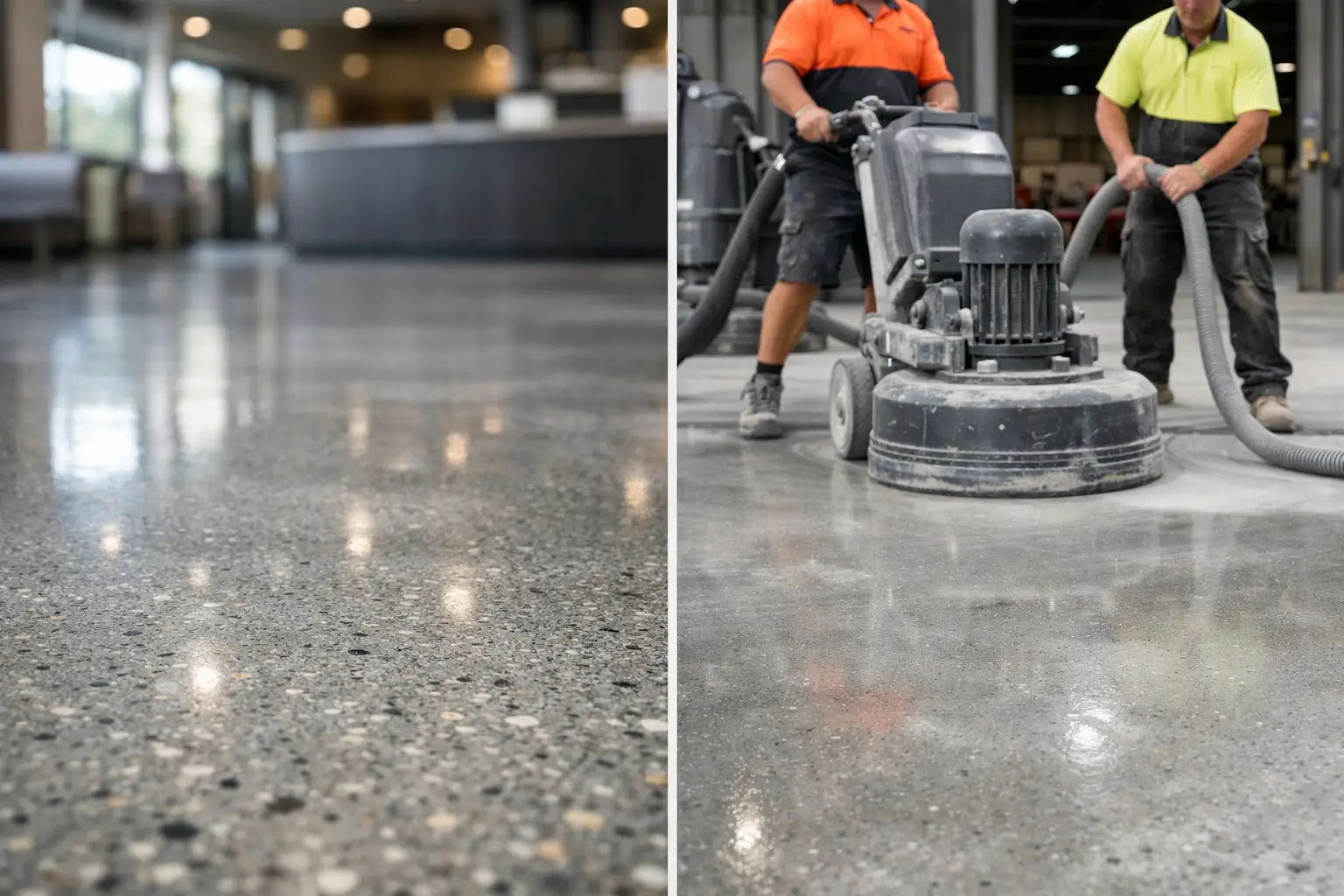
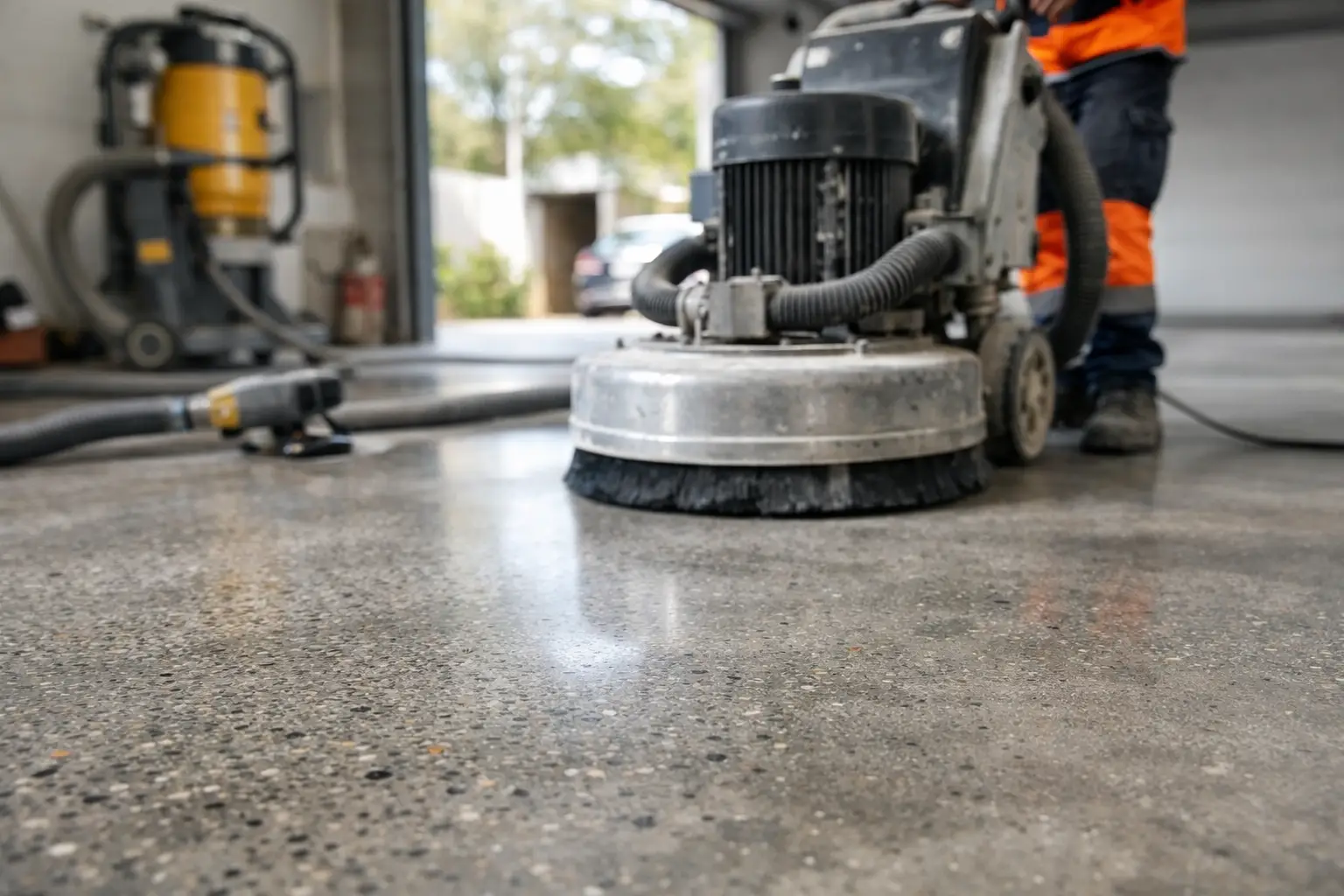
The term garage floor polishing is often used broadly, but there are different concrete finishing systems that can suit a garage. Mechanical polishing is a multi-stage diamond-grinding process that progressively refines the concrete surface. It may include a densifier to harden the slab and a penetrating guard to improve stain resistance and cleanability.
This process exposes and refines the concrete itself. Depending on the slab and the desired look, the finish can retain a more natural cream surface, reveal light aggregate, or be ground deeper for a stronger stone-like appearance. The finish is durable because it is built into the concrete surface rather than simply sitting on top of it.
A grind-and-seal finish takes a different approach. The concrete is mechanically ground to prepare and improve the surface, then protected with a quality sealer. This is often a practical choice for garages where a consistent finish, stronger protection from oil and easier cleaning are priorities. It can also be more suitable where the slab has cosmetic marks or where full mechanical polishing is not the best fit.
Neither option is automatically better. Full polishing offers long-term wear performance and a refined concrete look. Grind-and-seal can provide excellent protection, a broad range of sheen levels and a more controlled visual outcome. The right recommendation comes after inspecting the slab, not before.
Why preparation determines the finished floor
Concrete is not a blank canvas. Garage slabs can have tyre staining, old paint, oil contamination, curing compounds, patch repairs, cracks, moisture issues and uneven areas. If these conditions are ignored, even premium materials will not perform as intended.
Proper preparation begins with examining the concrete and identifying what needs to be removed, repaired or managed. Diamond grinding opens the surface, removes weak material and creates the right profile for the selected system. For a sealed finish, this profile is critical to adhesion. For mechanical polishing, it establishes the starting point for each polishing stage.
Oil contamination deserves particular attention. Years of leaking vehicles, lawn equipment or DIY work can leave oil deep in the slab. Surface cleaning helps, but it will not always remove staining entirely. In some cases, a shadow or discolouration remains visible after grinding. A straightforward contractor should explain this early, particularly if a natural polished concrete finish is being considered.
Cracks and small pits can usually be repaired, but repairs do not disappear into concrete in the same way they might in painted plaster. They may remain visible, especially in a polished floor. Many homeowners accept this as part of the material character. Others prefer a grind-and-seal system or a finish that reduces contrast. No surprises. No shortcuts.
Moisture is not optional to assess
Melbourne garages can be affected by rising moisture, poor drainage at the driveway, or water tracking in under the door. Moisture vapour moving through a slab can compromise some coating and sealer systems if it is not tested and addressed.
The solution may involve selecting a more suitable product system, improving external drainage, repairing joints or managing the slab before the final finish is applied. A floor can look right on handover day and still fail later if moisture has been treated as someone else’s problem.
Choosing a finish for the way you use the garage
The best finish is the one that suits the job the space actually does. A garage used for one family car and storage has different demands from a workshop with welders, jacks, tools and frequent vehicle movement.
For a contemporary home where the garage is visible from the entry or connected to internal living spaces, a lightly honed or polished concrete finish creates a clean, architectural look. It is easy to sweep, does not harbour dust like bare concrete, and brings a sense of continuity to the property.
For a working garage, stain resistance and maintenance often take priority. A properly prepared grind-and-seal floor can be a strong option, particularly where oil, grease and tyre marks are likely. The sealer selection matters here. It needs to suit the expected traffic, the desired sheen and the level of chemical exposure.
Gloss should also be considered carefully. Higher sheen reflects more light and can make a garage feel larger and cleaner. It can also show dust, tracked-in dirt and surface marks more readily. Satin and low-sheen finishes are often a sensible middle ground for busy households because they look refined without demanding constant attention.
Slip resistance is another practical consideration. A garage floor can become wet from rain, washing vehicles or bringing in moisture from the driveway. The finish should be chosen with this in mind. A specialist can recommend an appropriate texture, sealer or additive where additional grip is needed, without turning the floor into a rough, difficult-to-clean surface.
What a professional installation should look like
Quality garage floor polishing follows a controlled process, not a quick coat-over. The work begins with a site assessment that considers slab condition, access, existing coatings, drainage, expected use and the finish you want. This is where realistic expectations are set around aggregate exposure, cracks, stains and repair visibility.
The installation stage generally involves preparing the garage, mechanically grinding the slab, completing repairs where required, and applying the selected densifier, stain guard or sealer system. Dust-controlled equipment is essential. Grinding concrete creates fine dust, and professional extraction helps keep the work area, adjoining spaces and surrounding property properly managed.
Curing and return-to-service times should be clear before work starts. A floor may be ready for foot traffic before it is ready for vehicles, shelving or heavy equipment. Rushing this stage can mark or damage a new finish. A dependable contractor will provide practical handover advice rather than leaving you to guess when the garage can return to normal use.
At AMD Polished Concrete, the focus is on matching the preparation and finish to the slab and the way the garage will be used. That means clear advice before installation, disciplined surface preparation and a finished floor inspected against the agreed outcome.
Maintaining a polished or sealed garage floor
One of the main advantages of a finished concrete garage floor is that maintenance is straightforward. Sweep or vacuum loose grit regularly. Fine dirt can act like sandpaper under tyres and shoes, gradually dulling the surface if it is left to build up.
For routine cleaning, use a pH-neutral cleaner and clean water rather than harsh degreasers or acidic products. Clean oil spills promptly, especially on sealed floors. A protective finish improves resistance, but it is not a licence to leave contaminants sitting for days.
Avoid dragging sharp metal items, loaded shelving or machinery across the floor. Use protective pads under storage units and place a mat beneath vehicles that regularly drip oil. If tyre marks appear, start with the mildest suitable cleaner and avoid aggressive scrubbing that can damage the protective layer.
Over time, a sealed surface may need recoating in high-wear areas. The interval depends on traffic, cleaning habits, sunlight exposure and product selection. Mechanically polished concrete does not have a film coating that peels in the same way, but it still benefits from correct cleaning and periodic protective treatment when required.
The value is in the system, not the sales pitch
A garage floor is exposed to more abuse than most interior surfaces. It needs more than a good-looking product applied over an unknown slab. The lasting result comes from the system: assessment, grinding, repair, moisture management, material selection and careful handover.
If you are planning a garage upgrade, start by looking at how the space is used and what the existing concrete is telling you. The right floor should make daily life easier, protect the slab underneath and still look sharp after the first wet winter, the next DIY project and thousands of trips in and out of the garage.