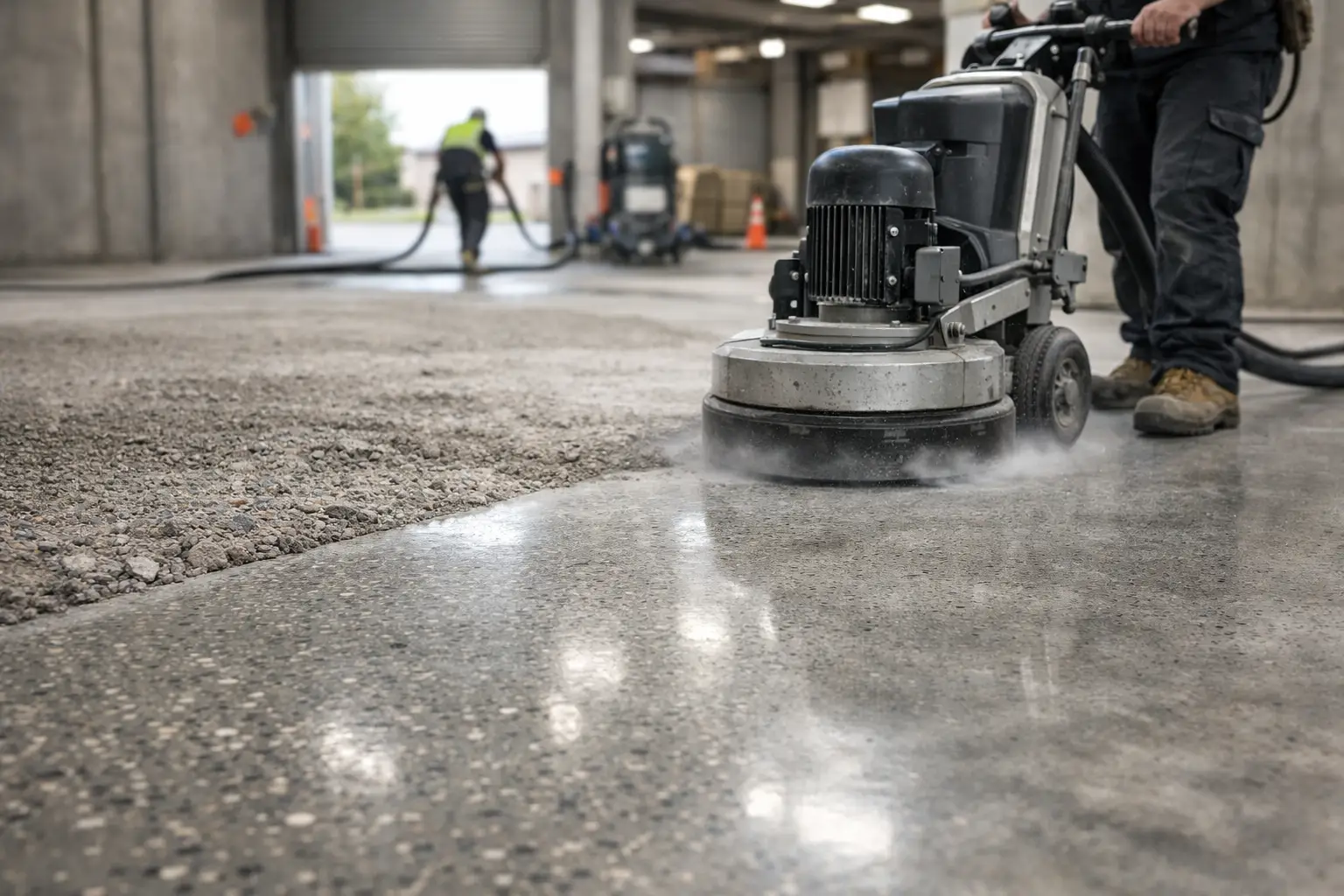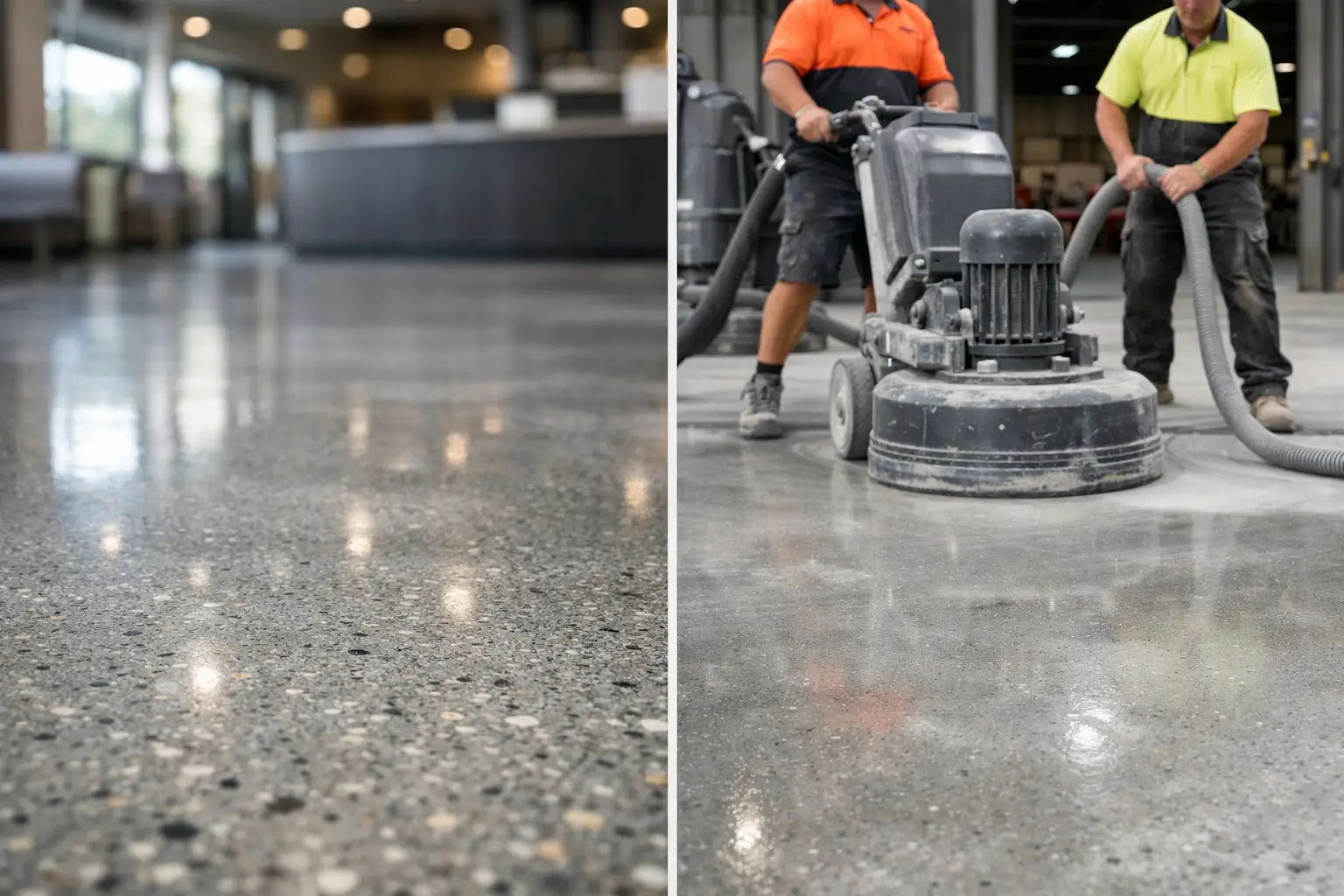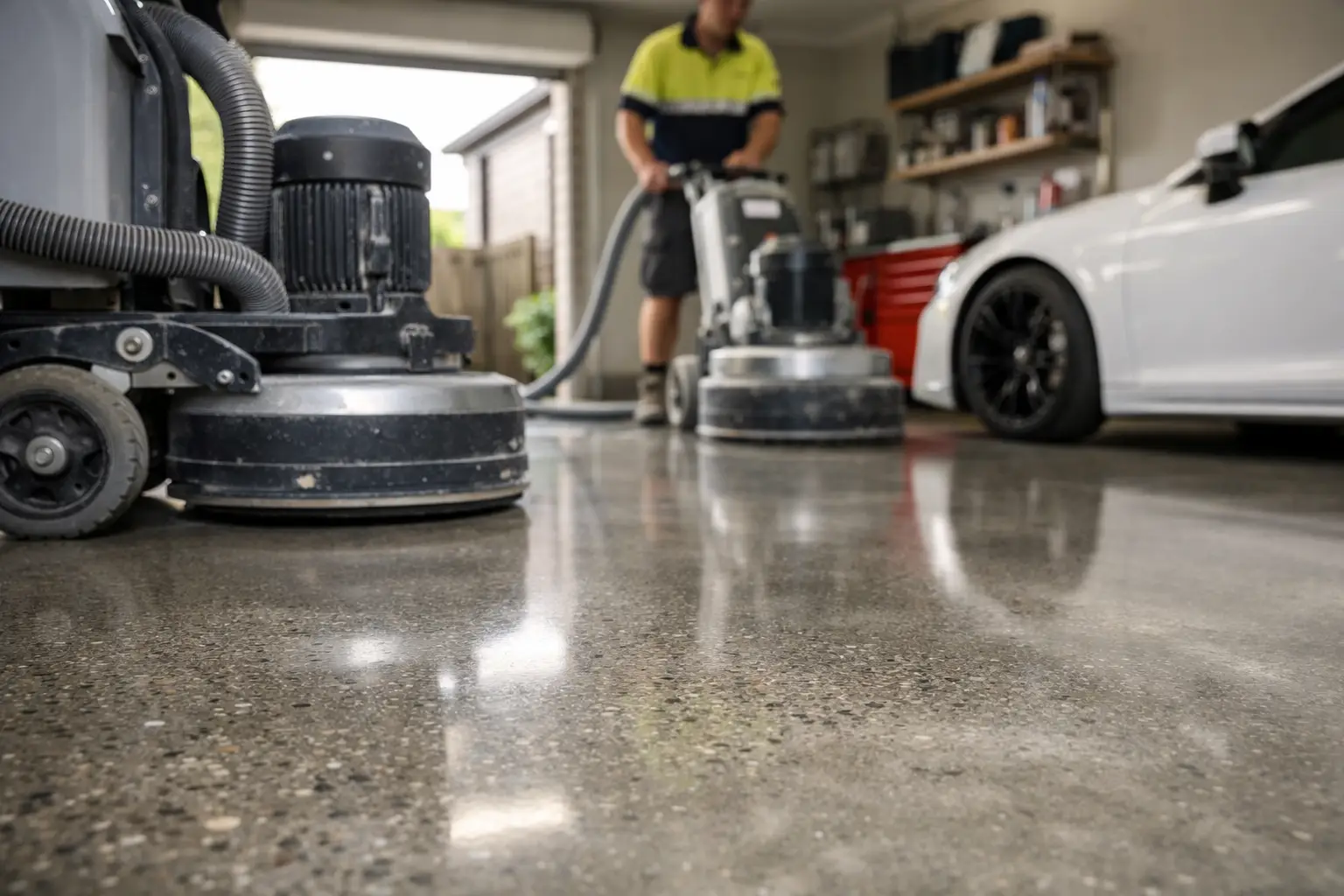
A polished concrete floor can look straightforward once it is finished. The real work happens before the final sheen appears: assessing the slab, repairing defects, grinding to the right level, and choosing a finish that suits the space. So, how much does polished concrete cost? In Melbourne, the answer depends less on the square metres alone and more on the condition of the concrete and the performance you need from it.
For a properly prepared floor, polished concrete is an investment in a durable, low-maintenance surface rather than a quick cosmetic coating. A clear quote should account for the substrate, the selected finish, access, edge work, repairs and the required level of protection. No surprises. No shortcuts.
How much does polished concrete cost in Melbourne?
As a general guide, polished concrete costs in Melbourne can range from around $70 to $180+ per square metre, including GST, for accessible projects with an existing concrete slab. The lower end generally applies to simpler grind-and-seal systems on sound concrete. Premium mechanically polished concrete, extensive repairs, heavy aggregate exposure or difficult site conditions can place a project at the higher end.
These figures are useful for early budgeting, not a substitute for a site assessment. Two garages with the same floor area can have very different preparation requirements. One may need a light grind and protective sealer. The other may have old coatings, oil staining, cracks, uneven patches and poor access that all need to be addressed before the floor can perform properly.
| Finish or project type | Typical Melbourne budget range | Best suited to | | — | —: | — | | Basic grind and seal | $70-$110 per m² | Garages, workshops and practical residential spaces | | Decorative grind and seal | $90-$130 per m² | Living areas, retail spaces and renovated interiors | | Mechanically polished concrete | $120-$180+ per m² | Premium homes, showrooms and high-traffic commercial floors | | Small-area or detailed work | Often priced as a project minimum | Entries, bathrooms, tight rooms and repair-focused jobs |
Small projects often cost more per square metre because mobilisation, equipment setup, edge grinding and finishing work take time regardless of floor size. A large, open warehouse may achieve a lower rate per square metre than a 25 m² garage with walls, steps and stored items to work around.
The finish you choose has the biggest impact
Polished concrete is often used as a catch-all term, but not every polished-looking floor is produced in the same way. The system matters because it changes both the upfront cost and the way the surface wears over time.
Grind and seal
A grind-and-seal floor is mechanically prepared with diamond grinding, then protected with a quality sealer. It can be finished in matte, satin or gloss levels and is a practical choice for garages, homes, shops and commercial spaces where a clean, durable appearance is the priority.
This is generally the more cost-effective option, particularly where the slab has limited decorative aggregate or the project requires an efficient result. The sealer provides stain resistance and makes cleaning easier, but it remains the wear layer. In high-use areas, it may eventually need maintenance or recoating.
Mechanically polished concrete
Mechanically polished concrete is refined through multiple diamond-grinding and polishing stages. Densifiers harden the surface, while increasingly fine abrasives create the chosen level of clarity and sheen. The finish is in the concrete itself rather than relying primarily on a topical coating.
It costs more because it takes more passes, more specialised tooling and greater control over the slab. For premium interiors, commercial spaces and floors expected to handle significant foot traffic, the long-term appearance and reduced coating maintenance can justify the higher initial spend.
The right option is not always the most expensive one. A busy garage may benefit more from a well-prepared grind-and-seal system with strong chemical and tyre-mark resistance than from a high-gloss decorative polish. The finish should match the way the space is used.
What changes the final price?
The concrete slab sets the baseline for the entire project. New concrete is not automatically easier or cheaper to polish. It may still have curing compounds, trowel marks, unevenness or inconsistent aggregate that affects the final result. Older slabs can also be excellent candidates, provided repairs and contamination are managed correctly.
Concrete condition and repairs
Cracks, spalling, holes and failed joints need to be repaired before polishing or sealing. Repairs protect the floor and improve its presentation, but they do not always disappear completely. Concrete is a natural construction material, and a quality contractor will explain where repaired areas may remain visible rather than promising a uniform finish the slab cannot deliver.
Oil, grease, adhesives, paint and old coatings also add preparation time. This is especially common in garages, factories and workshops. Correct removal and profiling are essential for sealer adhesion and a consistent finish.
Aggregate exposure
The more concrete removed, the more labour and diamond tooling the job requires. A cream finish leaves the surface largely intact and retains a softer, more natural concrete appearance. A salt-and-pepper finish removes a light layer to reveal fine aggregate, while a full aggregate exposure cuts deeper and shows the larger stones within the slab.
Full exposure can be striking, but it is not always possible to achieve evenly. Existing slabs vary in aggregate distribution, repairs and depth. A site inspection helps establish what the floor is likely to reveal before work begins.
Access, edges and room layout
Large grinding machines are efficient in open areas. Small rooms, stairs, tight corners, built-in cabinetry and perimeter edges require hand-held equipment and slower detailing. Furniture, racking and machinery may also need to be removed or worked around.
Access matters outdoors as well. Driveways, patios and pathways may require different preparation methods, drainage consideration and UV-stable protection. A floor system that works inside a living room is not automatically suitable for exposed external concrete.
Moisture and the operating environment
Concrete moisture can affect coatings and sealers, particularly in ground-level commercial spaces, garages and slabs without effective moisture barriers. Where moisture is present, the system needs to be selected carefully. Skipping this assessment can lead to whitening, adhesion failure or premature wear.
Commercial floors should also be priced around real operating conditions: forklift traffic, wheeled trolleys, food and beverage spills, oil, cleaning chemicals, public foot traffic and cleaning routines. A cheaper finish that cannot handle the environment is rarely cheaper once disruption and remedial work are considered.
Budget for preparation, not just appearance
The lowest quote can be tempting, especially when several contractors appear to be offering the same finish. Often, they are not. One scope may include crack repairs, coating removal, densification, edge work and a specified sealer system. Another may allow only a quick surface pass and a basic coating.
Ask what level of grinding is included, how repairs are treated, what sealer or densifier is being used, and whether the quoted finish is mechanical polishing or grind and seal. It is also worth confirming who is responsible for moving items, protecting adjacent surfaces and allowing the required curing time before vehicles or heavy loads return.
A polished concrete floor should be assessed as a system. Surface preparation creates the profile. The selected finish provides the appearance and protection. Proper handover and aftercare keep the floor looking right. Leaving any one of those steps vague is where cost overruns and disappointing results begin.
A realistic way to plan your project
Start with the purpose of the space. For a residential garage, decide whether tyre marks, oil resistance and easy cleaning are more valuable than a highly decorative aggregate finish. For a living area, consider how much natural variation you are comfortable seeing in the slab. For a commercial site, define the traffic, cleaning regime and downtime window before selecting a finish.
Then allow for a site inspection before locking in a budget. An experienced contractor can inspect the concrete, identify likely repairs, test the practical access and recommend a finish that fits the floor rather than forcing a standard package onto it. AMD Polished Concrete approaches quotes this way because the work beneath the finish determines how well the result lasts.
The best polished concrete project is not the one with the cheapest square-metre rate. It is the one where the preparation, finish and intended use all line up, leaving you with a floor that earns its place every day.