A concrete floor can look sharp on handover day and still fail where it matters: under tyres, around wet entries, beneath café chairs or across a busy warehouse aisle. Quality polished concrete Melbourne projects are not chosen on shine alone. They are specified around the condition of the slab, the traffic it will carry and the level of protection the space genuinely needs.
For a home, that may mean a low-maintenance garage floor that handles oil drips and tyre marks. For a commercial site, it may mean a dense, hard-wearing surface that stays presentable through daily foot traffic and cleaning. The right result starts with a clear decision about the finish, followed by disciplined surface preparation.
Why polished concrete performs differently
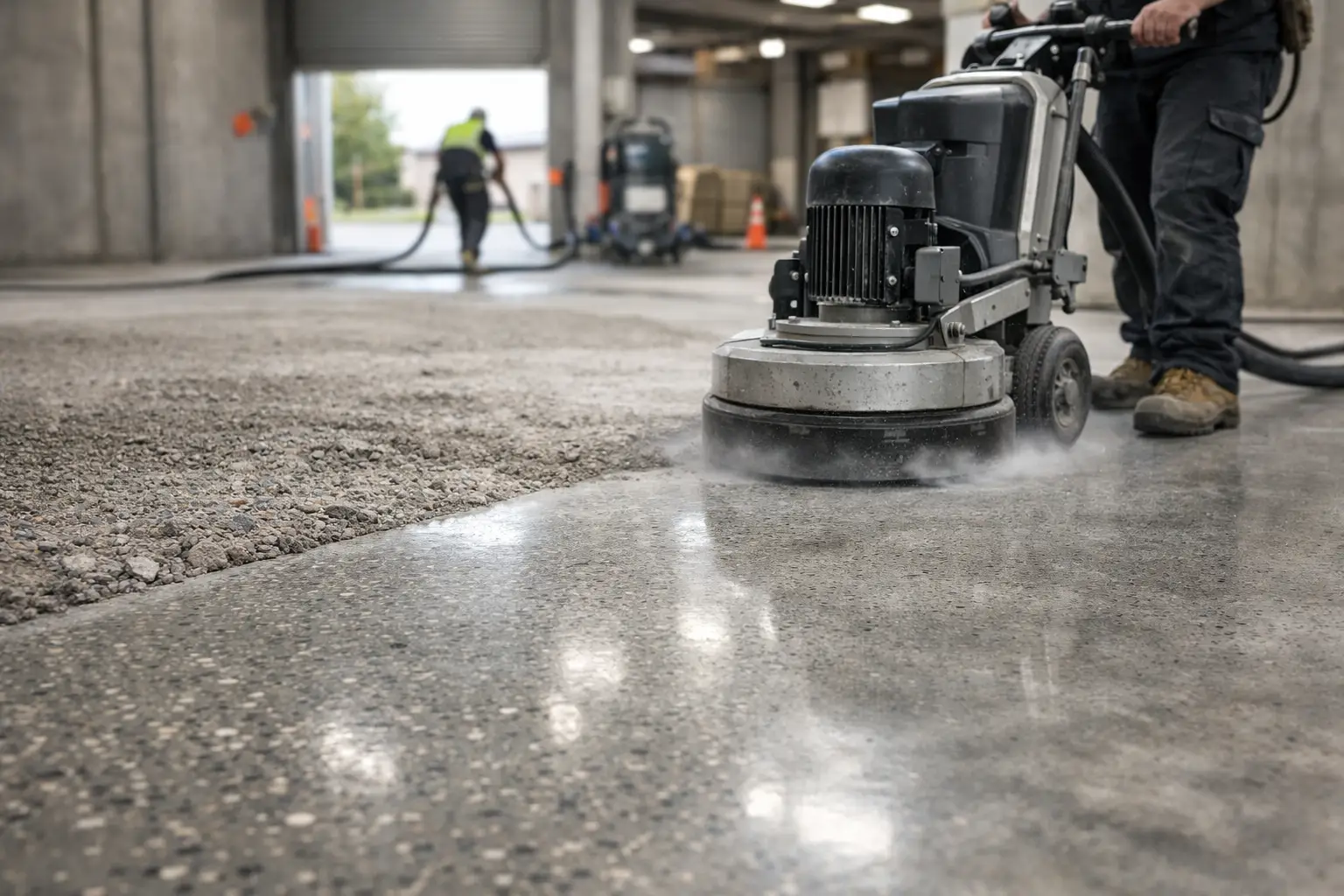
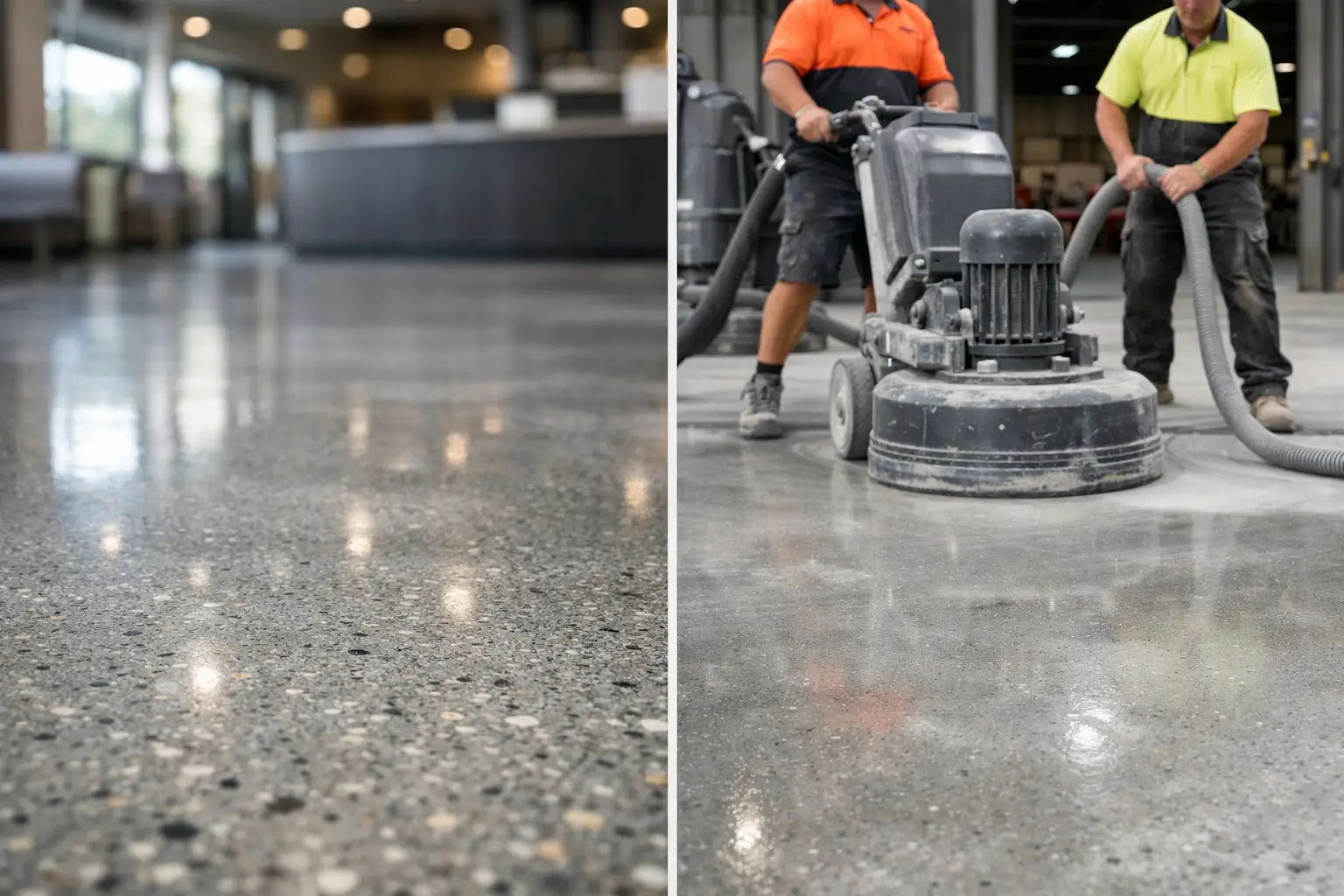
Polished concrete is a mechanical process. Diamond tooling progressively grinds, hones and refines the existing slab until it reaches the required level of aggregate exposure, clarity and sheen. A densifier is typically applied to strengthen the surface, then the concrete is polished to the selected finish.
Because the finished floor is the concrete itself, rather than a thick layer sitting on top of it, mechanical polishing can provide excellent durability in the right setting. It creates a clean, contemporary surface with less dusting, a tighter finish and straightforward day-to-day maintenance.
That does not mean every existing slab is ready to polish. Cracks, patches, soft areas, old adhesives, high spots and moisture issues all affect the process and the final appearance. These are not details to hide until work begins. They need to be identified at assessment stage, so the system can be matched to the site properly.
Polished concrete Melbourne finishes: choosing the right system
The term polished concrete is often used broadly, but not all concrete finishes are the same. The best choice depends on the slab, the look you want, the exposure to weather and how the floor will be used.
Mechanical concrete polishing
Mechanical polishing is suited to internal residential floors, garages, showrooms, retail spaces and commercial areas where a premium, long-life concrete finish is required. It is available in different levels of aggregate exposure, from a light cream polish that reveals little stone through to a full aggregate finish with more visual movement.
Sheen also matters. A matte or satin finish offers a restrained look and can be practical in areas where glare is unwanted. A higher gloss gives greater visual impact, particularly in open living areas and display environments, but it will show marks and tracked-in dirt more readily. Neither is automatically better. The right choice comes down to the space and maintenance expectations.
Grind and seal
Grind and seal involves mechanically preparing the concrete, then applying a protective sealer over the surface. It can be a practical option where the slab has visual inconsistencies, where a particular colour or finish is wanted, or where the budget and programme do not suit a full mechanical polish.
The quality of the grind still matters. A sealer will not correct poor preparation, contamination or inadequate profiling. Proper grinding creates an even surface and helps the selected coating bond as intended. In garages and commercial settings, the coating system should be chosen for the expected traffic, chemical exposure and cleaning routine.
Outdoor concrete sealing
Outdoor slabs face a different set of conditions. Melbourne driveways, patios and pathways are exposed to rain, UV, dirt, leaf tannins, tyre traffic and changing temperatures. A highly polished indoor-style finish is not usually the right solution outside, particularly where slip resistance is a concern.
Outdoor concrete sealing is designed to protect and improve the existing surface while retaining appropriate grip. The required finish varies between a pedestrian path, an entertaining area and a driveway. This is where fit-for-purpose advice matters more than chasing a particular look from an indoor inspiration photo.
The slab sets the limit on the final look
Concrete is not a manufactured tile. Each slab has its own aggregate, curing history, repairs and variations in hardness. Two floors can receive the same process and still look different. That character is part of the appeal, but it needs to be understood before a finish is selected.
A site assessment should establish whether there are existing coatings to remove, whether the floor is level enough for the intended use, and whether cracks require treatment. It should also consider moisture, particularly before coatings or epoxy systems are applied. Moisture moving through a slab can compromise adhesion if it is not tested and addressed correctly.
For existing homes, it is also worth checking door clearances, skirting details, floor transitions and fixed cabinetry. Grinding removes material. A well-planned project accounts for those edges and levels before machinery arrives, rather than creating avoidable rework later.
Preparation is where durable floors are made
The visible polish is only one part of the job. The work beneath it determines whether the floor performs over time. Surface preparation may involve removing glue, levelling compounds, failed coatings, paint, grease or other contaminants before the concrete can be assessed and worked.
Diamond grinding is selected to suit the hardness and condition of the slab. The objective is not simply to make the surface look cleaner. It is to create a sound, even base for polishing or to achieve the right profile for a coating system. For epoxy floor preparation, that profile is essential. Smooth-looking concrete can still be unsuitable for coating if it has not been mechanically prepared.
Crack repairs also need realistic expectations. Repairs can stabilise and fill damage, but they may remain visible in a polished finish. On a floor where a uniform appearance is the priority, a grind-and-seal or coating system may be the better option. Clear advice upfront is better than promising an invisible repair that concrete cannot deliver.
Matching the finish to the space
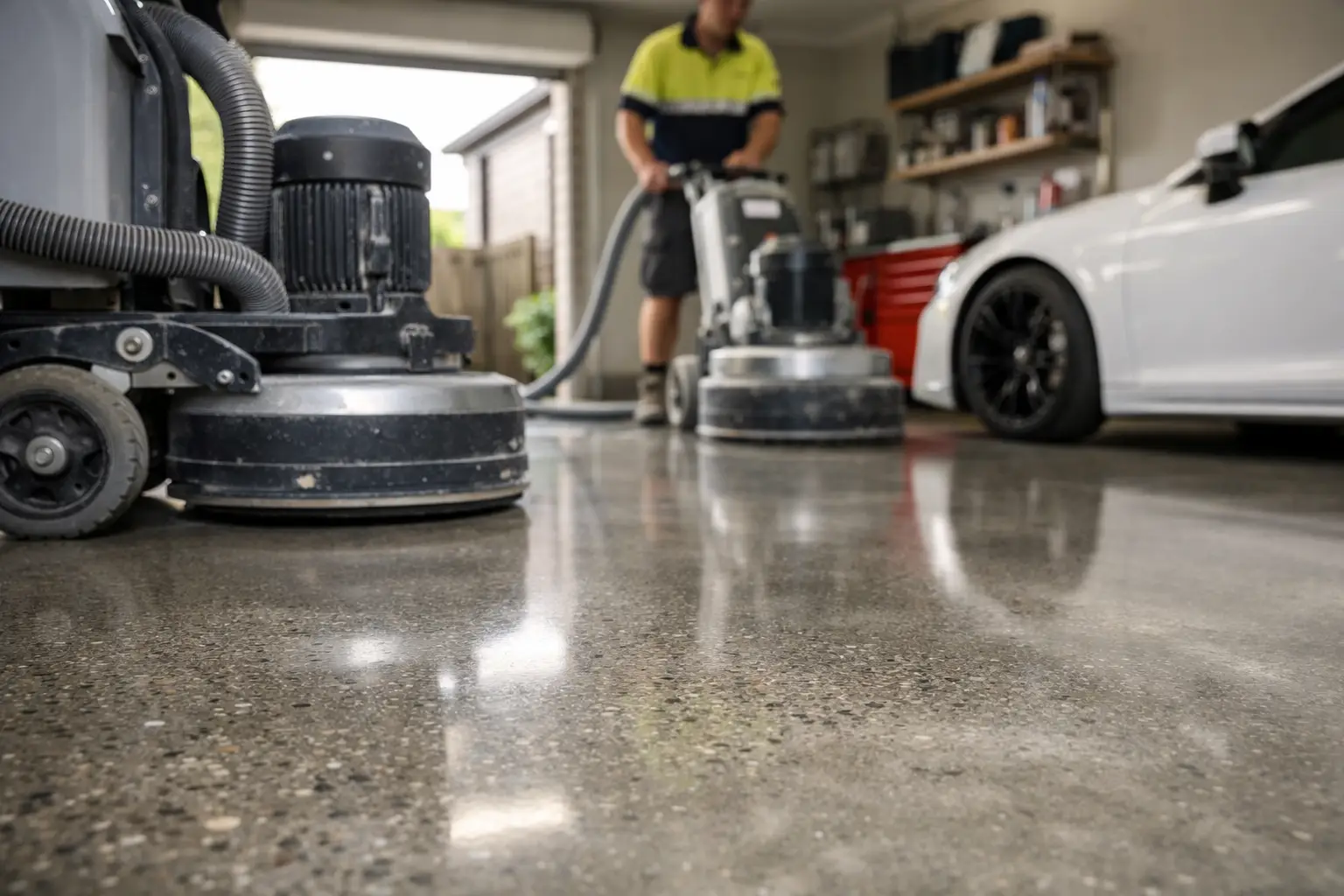
A garage floor needs to cope with tyres, occasional fuel or oil spills, tools and vehicle traffic. Preparation and protective treatment should be chosen with those conditions in mind, not merely for a glossy appearance. Regular cleaning will still be needed, but a properly finished floor is far easier to maintain than bare, dusty concrete.
In living areas, the focus often shifts towards aggregate exposure, reflectivity and clean transitions to adjoining finishes. Mechanical polishing can work particularly well with contemporary interiors because it creates a continuous surface without grout lines or loose edges.
Commercial floors require another level of planning. Foot traffic, pallet jacks, cleaning chemicals, food spills, forklift routes and after-hours access can all influence the specification. A retail showroom and a working warehouse may both have concrete floors, but they should not automatically receive the same treatment.
Before work starts, a capable contractor should confirm four practical points:
- the condition and moisture behaviour of the slab
- the intended traffic, including vehicles and equipment
- the finish level, colour and aggregate exposure expected
- access, staging and downtime requirements for the site.
These checks keep the project grounded in performance, not assumptions.
Looking after a polished or sealed floor
Concrete floors are low maintenance, not maintenance-free. Dust and grit act like an abrasive under shoes and tyres, so regular sweeping or dust mopping protects the finish. Use a neutral cleaner suited to the installed system and avoid harsh acids, abrasive pads or unsuitable degreasers that can dull or damage the surface.
Spills should be cleaned promptly, especially oil, wine, food acids and chemicals. Sealed outdoor surfaces may require periodic reapplication depending on sun exposure, traffic and the product used. Internal mechanically polished concrete generally does not need a topical coating reapplied, though it still benefits from correct cleaning and sensible protection under heavy equipment.
For commercial sites, maintenance planning should be part of the handover. The cleaning team needs to know what has been installed and which products are suitable. A good floor can be shortened by the wrong cleaning regime just as quickly as by heavy traffic.
Make the decision before the build schedule closes
Concrete flooring works best when it is considered early. New slabs can be designed and protected with the intended finish in mind, while existing slabs can be inspected before demolition, joinery installation or final fit-out restricts access. This reduces delays and gives clearer control over the result.
At AMD Polished Concrete, the approach is straightforward: assess the surface, recommend the system that suits the site, complete the work with the right equipment, then inspect the finish with the client. No surprises. No shortcuts.
Before choosing a sheen or saving another reference image, arrange an on-site assessment and ask what your concrete can realistically become. The most successful floor is not the one that looks best in a photo. It is the one that still performs when the space is being properly used.